Insights · 10 November 2025
Spanda Sastra : The Ancient Science of Vibration and Its Relevance in Sound Therapy
Spanda Sastra is one of the core texts of Kashmir Shaivism, a profound spiritual philosophy from ancient India. The term Spanda means “vibration,” “pulse,” or “throb.” But it does not refer to a physical vibration—it points to a subtle, conscious pulsation that forms the foundation of all existence and Śāstra is a Sanskrit word that means precept, rules, manual or book.
According to this ancient wisdom, everything in the universe is in constant rhythmic motion—an eternal dance of energy and awareness. This vibration is not mechanical but alive—it is the creative movement through which pure consciousness expresses itself as the world we experience.
Spanda Sastra and Modern Sound Therapy
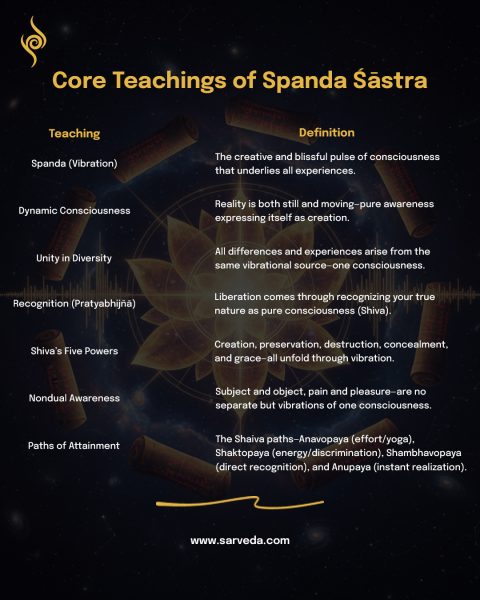
In today’s world, where sound therapy and vibrational healing are gaining recognition, the teachings of Spanda Śāstra feel more relevant than ever. Modern sound healers often speak about frequency, resonance, and entrainment—concepts that beautifully echo the principles of Spanda. The idea that sound and vibration can restore harmony in the body and mind aligns perfectly with Spanda’s teaching that healing occurs when we reconnect with the universal rhythm of consciousness. By engaging consciously with sound—through instruments, the human voice, or even silence—we can tune into that primordial vibration, restoring balance, awareness, and inner peace. In essence, Spanda Śāstra bridges ancient spiritual science and modern sound therapy, reminding us of one timeless truth: All life is vibration.Core Teachings of Spanda Sastra
These teachings reveal how consciousness is not static—it constantly vibrates as life, movement, sound, and awareness.
Spanda Sastra in Sound Healing Practice
Here are 10 practical insights from Spanda Śāstra that sound therapists and wellness practitioners can apply to deepen their practice:- Recognize All Experience as Vibration Emotions, thoughts, and sensations are waves of vibration. Instead of labeling them, experience them consciously as pathways to healing.
- Cultivate Inner Awareness Encourage clients to listen within—to sense the subtle pulsation (Spanda) during sound baths or meditation.
- Be Present with Emotions When intense feelings arise, allow them to move through with awareness. This conscious witnessing helps energy flow freely.
- Use Breath and Intention Blend breathwork (Pranayama) with sound. Inhale to feel vibration filling the body, exhale to release tension and disharmony.
- Release Inherited Vibrations Sound and awareness can help dissolve ancestral or emotional patterns stored in the body, bringing clarity and lightness.
- Sound as a Mirror Every tone—whether from a singing bowl, drum, or mantra—reflects your inner state. Listen not just with ears but with presence.
- Understand That Everything Is Vibration Healing is not about adding something new, but reconnecting with the natural rhythm already present within every cell.
- Encourage Gentle Movement Subtle shaking or pulsing can help release energy blocks and restore natural vibrational flow.
- Return to Silence After sound work, rest in deep silence—the still source behind all vibration. This is where true integration and healing occur.
- Strengthen the Witness Train yourself and your clients to observe vibrations without being carried away by them. This shift from reactivity to awareness is the essence of Spanda in practice.
The Essence of Spanda for Modern Wellness
For wellness seekers and sound therapists, Spanda Śāstra offers more than philosophy—it provides a practical map to live in harmony with the universe’s natural rhythm. By aligning with the science of vibration, we awaken deeper awareness, emotional balance, and a sense of unity with all life. When we attune ourselves to Spanda, we don’t just hear sound—we feel the heartbeat of existence itself.Tags:
- Practical Insights From Spanda Śāstra
Checking session…
…
Related Insights
View All
Everything You Need to Know About Tuning Forks
The Little Fork That Does Wonders There is something almost comedic about a tuning fork at first glance. It's a Y-shape — a thin metal stick that splits into two prongs. You tap it. It hums. That's it. And yet, this…
Consonance and Dissonance the two Pillars of Sound
Consonance, Dissonance and how it facilitates deep psychological shifts A “clash” in sound is not just something heard in the ears, it is processed in the mind and felt in the nervous system. Healing through sound rests…