For those embarking on or deepening their sound healing journey, two instruments consistently stand out, the ancient Tibetan singing bowl and the modern crystal singing bowl. Both offer distinct soundscapes, tonal textures, and vibratory qualities—but understanding their differences is key to finding the instrument that resonates with you most deeply.
Let’s begin with the primary distinction between them:
How They Sound
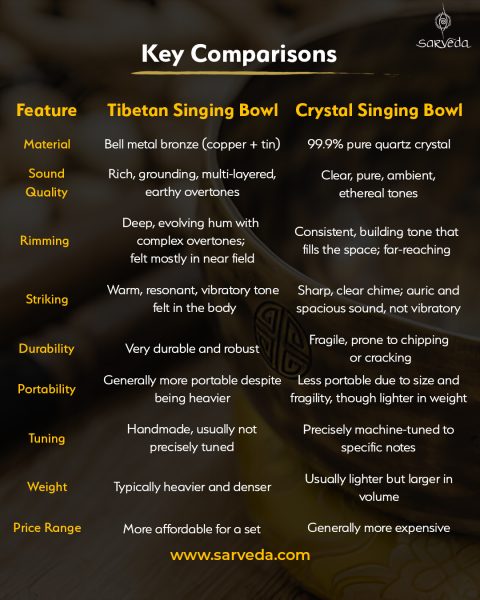
When you rim a Tibetan singing bowl, it produces a deep, low hum filled with rich, evolving overtones. This sound is intimate—felt more in the near field, close to the bowl, and doesn’t travel very far.
In contrast, rimming a crystal singing bowl creates a long, pure, and consistent tone that gradually builds in intensity. The sound is ambient, spacious, and far-reaching, often filling the entire room.
When struck, a Tibetan bowl emits a warm, bell-like tone that fades into a soft hum. Using a long mallet, it can create a penetrating vibration that is physically felt, especially when placed close to or directly on the body.
On the other hand, striking a crystal bowl produces a clear, bright chime. While it doesn’t offer the same tactile vibration as a Tibetan bowl, it fills the space with an auric, enveloping sound, creating an ethereal, atmospheric experience.
A Deeper Look
Tibetan Singing Bowls
Hand-hammered from bell metal bronze—a traditional alloy of copper and tin—Tibetan bowls are rooted in centuries of Himalayan tradition. They produce warm, grounding tones full of evolving overtones.
These bowls are sturdy, dense, and often heavier than crystal bowls, making them durable and ideal for close-proximity or tactile work. While they are generally more portable, tuning may not be exact due to their handmade nature (often within a tolerance of ±8 Hz).
Crystal Singing Bowls
Crafted from 99.9% pure quartz crystal, these bowls offer a clear, consistent, and sustained tone. They’re visually striking, easy to play, and perfect for filling large spaces with sound.
Although often lighter than metal bowls, they are voluminous and fragile, making them less travel-friendly. They offer precise tuning and a luminous tone, but lack the vibratory depth and overtone complexity of their Tibetan counterparts.
So, Which One Should You Choose?
Both bowls offer something unique, and the best choice depends on your intentions and usage:
- Choose a Tibetan singing bowl if you prefer deep, grounding, and multi-layered tones that connect to ancient traditions. They’re ideal for individual sessions, tactile use, and travel, and tend to be more budget-friendly.
- Go for a crystal singing bowl if you seek clear, ambient, and expansive tones that fill a room with ethereal presence. They’re ideal for larger spaces, group sound baths, or aesthetic studio setups—though they do require more care due to fragility.
What Happens When You Combine Both?
True sonic alchemy happens when Tibetan and crystal bowls are used together.
Start a session with the grounding resonance of a Tibetan bowl, drawing listeners into the present moment. As the sound journey unfolds, introduce the soaring tones of a crystal bowl to elevate, clear, and expand the energy.
The penetrating, vibratory sound of the Tibetan bowls complements the ambient, auric soundscape of crystal bowls, creating a rich balance between earth and ether. Tibetan bowls anchor the near field, while crystal bowls envelop the far field—together, offering a multidimensional sound experience.
Final Thoughts
Ultimately, what matters most is your intention and connection to the sound. Whether you choose one or both, these instruments can become powerful allies in your healing, musical, or meditative practice.
Take your time, explore with curiosity, and let the sound lead the way.