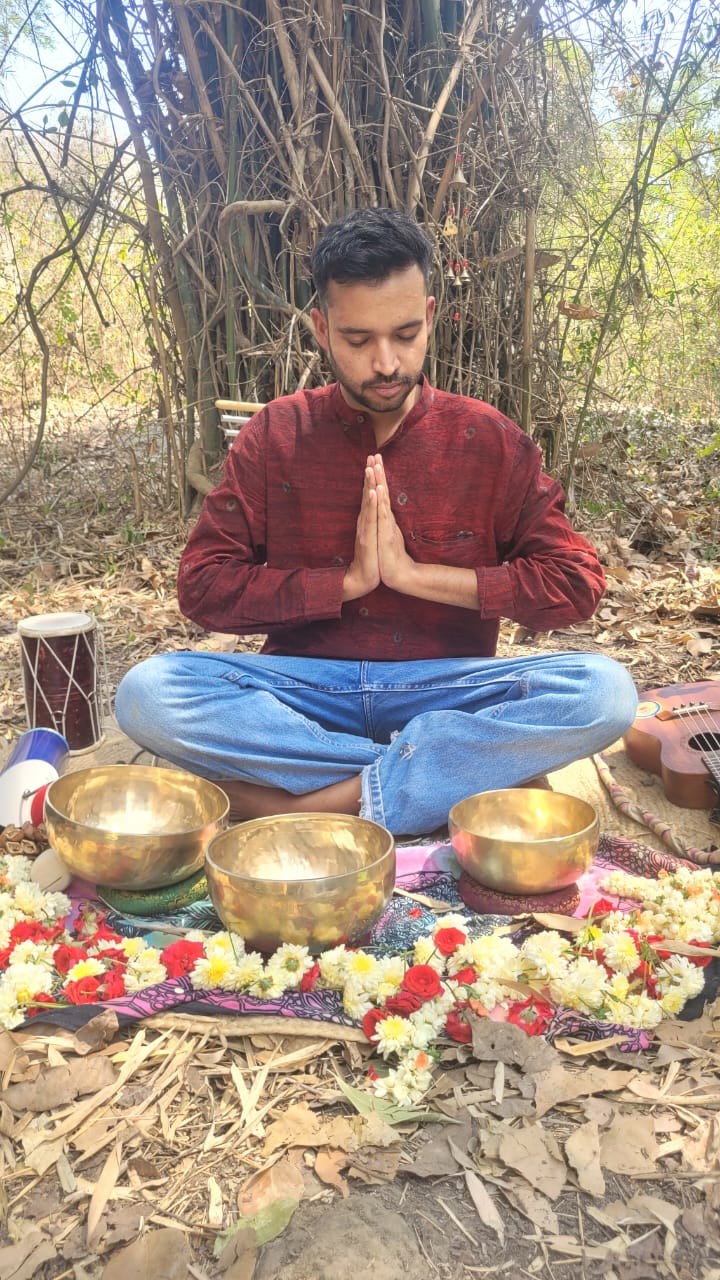
Course overview
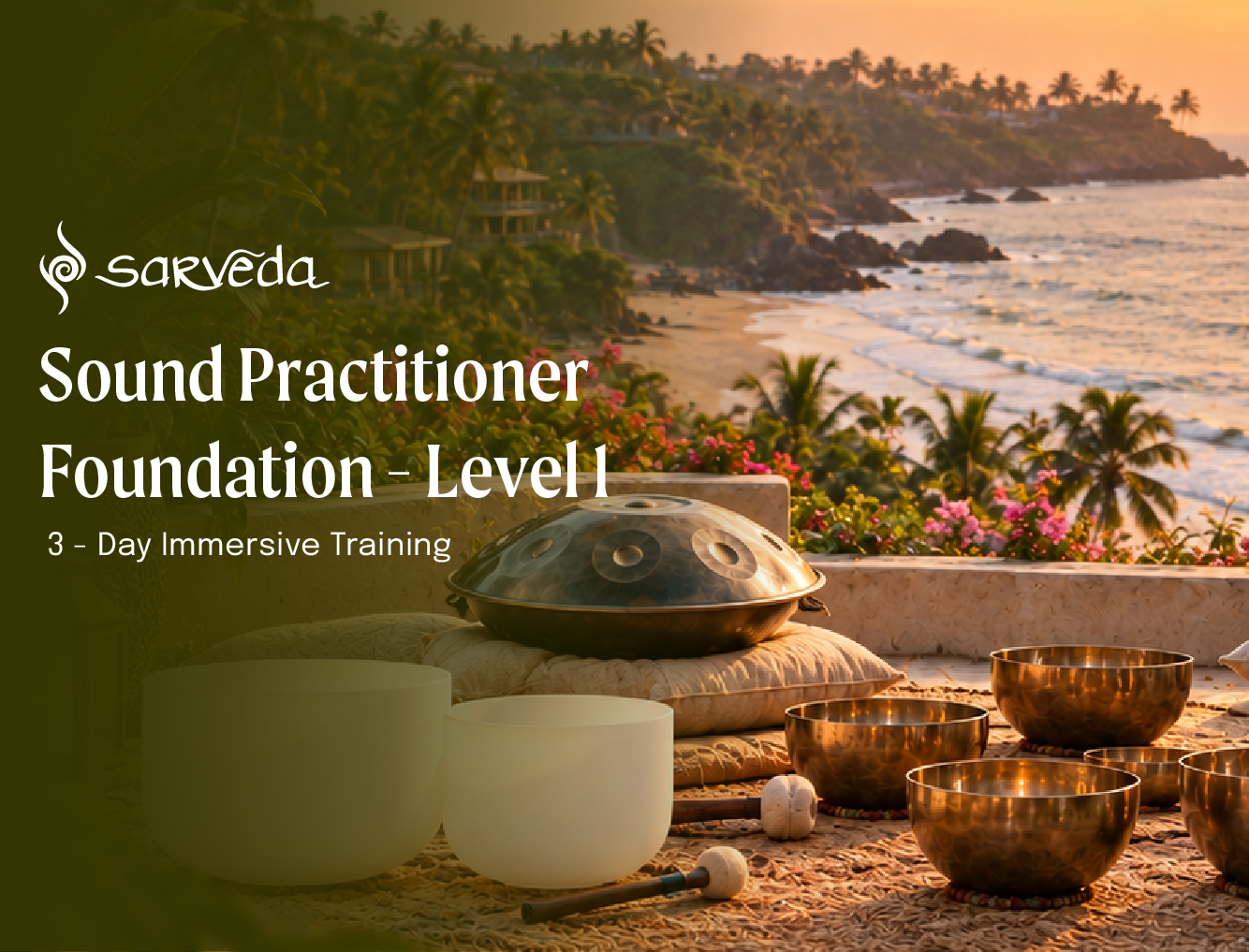
An immersive, practice-led training for those who want to deepen their understanding of sound instruments and develop the foundations of sound journey facilitation.
Across three days, participants explore sound and resonance, practise with a range of instruments, and investigate how rhythm, percussion, voice and chanting can contribute to a cohesive sound experience. The programme includes extended instrument practice and a group practical exercise in sound journey design and facilitation.
Course modules and topics
Module 1: Foundations of Sound, Nada & Psychoacoustics
Vibration, sound waves, frequency, amplitude, wavelength and resonance
Hertz, decibels, hearing and sound perception
Acoustic entrainment and its distinction from neural entrainment
Nada Brahma, Om and traditional philosophical perspectives on sound
Panchakoshas, chakras and Panchabhootas as traditional frameworks
Indian swaras, Western notes, octaves and musical intervals
Consonance, dissonance, auditory beating and introductory cymatics demonstrations
Group listening and resonance exercises
Module 2: Tibetan Singing Bowls & Sound Therapy
History, origins, manufacture, materials and bowl characteristics
Bowl sizes, thickness, weight, frequency and overtones
Mallets, accessories and instrument care
Striking, rimming, pressure, speed and positioning
Playing multiple bowls, dynamics and silence
Seven-bowl sets and exploring tonal combinations
Introductory sound session structures and bowl placement concepts
Specialised bowl approaches where available
On-body approaches only under appropriate supervision, screening, consent and safety practices
Module 3: Crystal Bowls, Harmony & Musical Intervals
Crystal bowl origins, manufacture and characteristics
Striking, rimming and playing techniques
Pitch, octaves and frequency
Intervals, including thirds and fifths
Consonance, dissonance and harmonic relationships
Near-field and far-field listening
Group playing and practical exploration of combinations
Module 4: Tuning Forks & Vibrational Applications
Weighted and unweighted tuning forks
Introduction to frequency systems and examples such as 128 Hz and 136.1 Hz
Solfeggio, planetary, chakra and other systems as differing frameworks
Activation techniques and auditory beating
Vibration through surfaces
Guided demonstrations and partner practice
Consent, hygiene and safe listening distance
Module 5: Gongs, Chimes & Elemental Instruments
Tuned pipes, energy chimes, bar chimes, swinging chimes and metallophones
Rainsticks, ocean drums and other elemental instruments
Gong types, size, timbre and mallets
Gong playing techniques, priming and dynamics
Low-frequency bowls and instrument combinations
Building textures, transitions and dynamic contrast
Managing sound intensity and participant comfort
Module 6: Rhythm, Drumming & Percussive Instruments
Pulse, tempo, meter, repetition and rhythmic cycles
Exploring shakers, rattles, frame drums, shamanic drums and other percussion instruments
Handpan or tongue drum introduction, depending on availability
Group drumming, call-and-response and rhythmic interaction
Rhythm layering and simple improvisation
Using percussion to create texture, contrast, grounding and movement
Gentle movement or breath-based rhythmic exercises where appropriate
Integrating percussion into the progression of a sound journey
Module 7: Voice, Chanting & Nada Yoga
Breath, vocal resonance, pitch and attentive listening
Shruti box, tanpura or harmonium, depending on availability
Drone, tonic or Sa, and introductory swaras
Om, mantra, bija sounds, humming and toning
Vocal exploration and improvisation
Call-and-response and group chanting practices
Nada Yoga and traditional perspectives on sound and inner listening
Integrating voice and chanting into a facilitated sound journey
Module 8: Crafting & Facilitating Sound Journeys
Space preparation, room acoustics and instrument placement
Facilitator preparation, intention setting and participant orientation
Consent, boundaries, accessibility and participant comfort
Managing sound intensity and volume
Structuring arrival, opening, exploration, integration and closing
Instrument combinations, sequencing, transitions, dynamics and silence
Pacing, timing and responding to participant discomfort
Giving clear instructions, managing groups and gathering feedback
Group practical assessment: designing and presenting a short sound journey
Reflection on technique, coherence, pacing, transitions, safety and communication
Learning outcomes
Participants will develop a foundation in sound and resonance, gain practical experience with a range of sound instruments, explore percussion and vocal practices, and learn how to structure and facilitate an introductory group sound journey.
The programme provides additional time for practical exploration and integration compared with the two-day foundations format.
Certification
Participants who meet Sarveda's completion and assessment requirements receive a Certificate of Completion — Level 1 Sound Journey Practitioner, subject to confirmation of the official certificate title and criteria.
The certification recognizes completion of Sarveda's Level 1 training. It does not constitute a clinical licence or establish advanced therapeutic competence.